REVIEW · REYKJAVIK
Dive the Divide: Silfra Fissure Scuba Tour | Meet at Thingvellir
Book on Viator →Operated by Arctic Adventures · Bookable on Viator
Cold water, clear blue, and real geology.
This small-group Silfra fissure scuba tour works like a well-run mission: you get guided navigation through Silfa Hall, Cathedral, and Lagoon, with tight instruction before you ever hit the water. I especially like the max 3-person group size, which means more time with your instructor and better gear checks. I also love that all specialized equipment is included, so you show up ready instead of scrambling for rentals. The main thing to weigh: this is a challenging, gear-heavy cold-water experience, and you must already have drysuit scuba experience and the paperwork to match.
Meet at Thingvellir, then step into one of Iceland’s most unusual underwater places.
After a thorough briefing and a slow, controlled setup in waist-deep water, you’ll follow your guide through narrow cracks and wide caverns at depths up to 59 feet (18 meters), with visibility that can stretch past 328 feet (100 meters). The good news is the tour is designed around your comfort: you’ll get warming hot chocolate and cookies afterward. The drawback is simple logistics: there’s no pickup from Reykjavik, and you’ll also pay a small Thingvellir parking fee on your own.
In This Review
- Key things I’d circle before you book
- Meet at Thingvellir: briefing, rules, and gear that actually fits
- A smart tip for the briefing room
- Silfra logistics: heavy kit, cold water, and how the session is paced
- What “limited to drysuit-proven divers” really means
- Entering the water at the submerged platform
- About drinking the water
- Underwater route: Silfa Hall, Cathedral, and Lagoon
- The narrow gap, then the bigger rooms
- You’ll learn how to see in this environment
- Gear and comfort: gloves, underlayers, and what to bring
- A guide-focused note on comfort
- Post-session recovery: hot chocolate, cookies, and the walk back
- Price and value: what $296.41 covers, and what costs extra
- Who should book this Silfra fissure scuba tour
- A quick reality check before you go
- Should you book this Silfra fissure scuba tour?
- FAQ
- Where do I meet for the Silfra fissure scuba tour?
- How long is the experience?
- What’s included in the tour price?
- Do I need pickup from Reykjavik?
- What are the drysuit requirements?
- How does winter change the schedule?
Key things I’d circle before you book
- Small-group setting (3 divers or fewer): more hands-on help and clearer communication in chilly conditions.
- Real pre-water training: you’ll do checks for weights and safety signals before the route begins.
- Serious drysuit requirements: you’ll need certification/verification and you should have worn a drysuit recently.
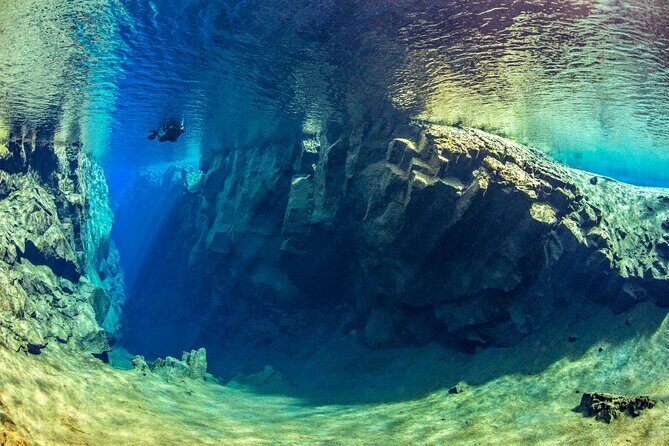
- A route with named stops: Silfa Hall, Silfra Cathedral, and Silfra Lagoon each feel different under the ice-blue water.
- Winter water-time changes: colder temps can mean one longer session instead of two shorter ones.
- Warm-up afterward: hot chocolate and cookies help you recover fast after gear removal.
Meet at Thingvellir: briefing, rules, and gear that actually fits
The tour begins at the Silfra meeting point at Vallarvegur, 806, Iceland, in Thingvellir National Park. You’ll meet your instructor and go straight into a briefing that covers park rules, signals, and how the session will run underwater. This matters more than most people expect—Silfra has specific conditions, and you’ll be following a route where good communication keeps things calm.
Next comes the hands-on gear phase. You’ll get acquainted with your drysuit setup, mask, fins, and the full kit you’ll carry. The tour also makes a point of making sure you understand the procedures before you step into the water, not once you’re already stressed and cold.
One detail I really like here: the setup is designed for skill verification. The tour limits entry to PADI-certified divers, and it also requires drysuit scuba certification or verified drysuit experience. If your drysuit training is older or you can’t show proof, you could be stopped before you even start.
Other Silfra snorkeling and diving tours we've reviewed


A smart tip for the briefing room
Show up dressed for the weather, because you’re going to be handling gear and waiting around. Even if you’re excited, keep it practical: warm socks and warm undergarments are required, and they’ll do a lot to reduce the shock when the water time starts.
Silfra logistics: heavy kit, cold water, and how the session is paced
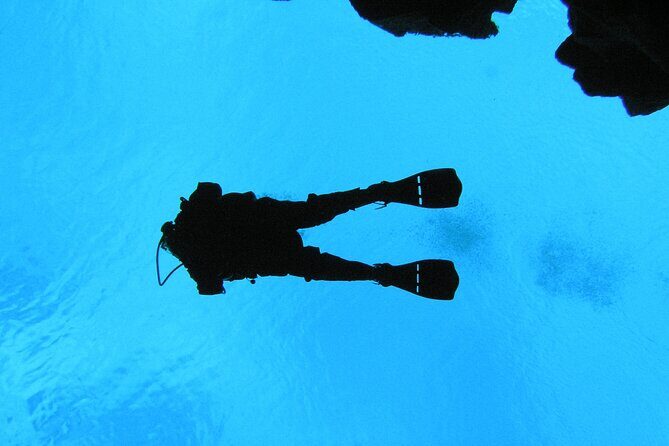
This is not a casual stroll into clear water. Silfra requires you to carry heavy scuba equipment from shore to the water area for about 400 meters (1,312 feet). That’s a real workload on top of cold-water effort.
Depth is controlled, with a maximum around 59 feet (18 meters). The point isn’t extreme depth—it’s staying within a safe envelope while moving through a geological crack system with strong cold-water conditions.
The pacing changes by season:
- In warmer months, you may get two 30-minute underwater sessions.
- In winter, if temperatures are below freezing, you’ll likely do a single session around 45 minutes.
That winter adjustment isn’t just a schedule tweak; it reflects safety decisions tied to water and weather conditions. It also means you should plan your day with the understanding that the plan could shift if conditions are too cold.
What “limited to drysuit-proven divers” really means
You’ll need your drysuit scuba experience verified. Your instructor needs to see your certification card or a logbook showing at least 10 previous drysuit scuba dives, signed by a dive professional. You also need to have used a drysuit within the last 2 years so your skills feel current. If that paperwork step feels like a hassle, treat it as part of what makes this tour work well: it filters out people who aren’t ready for the cold-water system.
Entering the water at the submerged platform
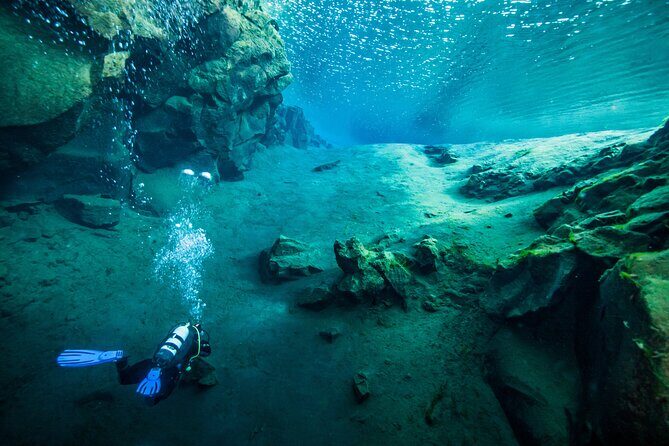
Once gear checks are done, you head to the Silfra entrance and descend a ladder to a submerged metal platform. From there you’ll acclimatize in waist-deep water before going further.
This phase is practical, not theatrical. You’ll do weight and safety checks, get your buoyancy feeling dialed in, and confirm you can move comfortably while wearing the full kit. In cold water, this step can make or break your enjoyment. If you skip early acclimatization and rush, the cold can steal your focus fast.
Other Thingvellir, Geysir and Gullfoss tours we've reviewed


About drinking the water
Yes, it’s clean and clear enough that you can safely taste it during the experience. That’s not the main reason you’re here, but it adds a fun reality check: you’re in a place with water that comes through a very unusual natural system.
Underwater route: Silfa Hall, Cathedral, and Lagoon
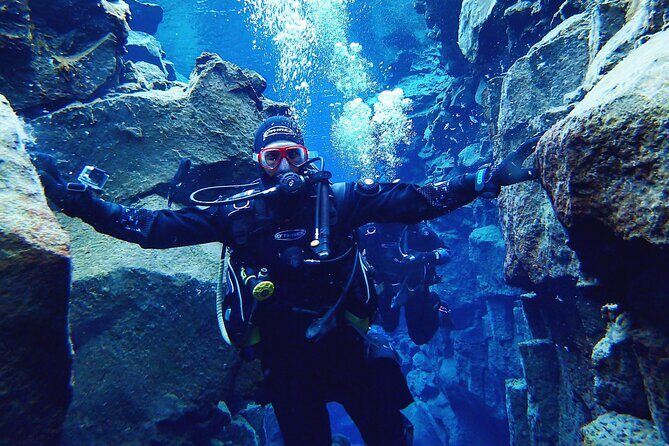
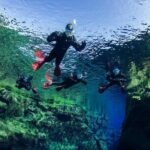
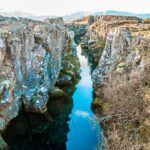
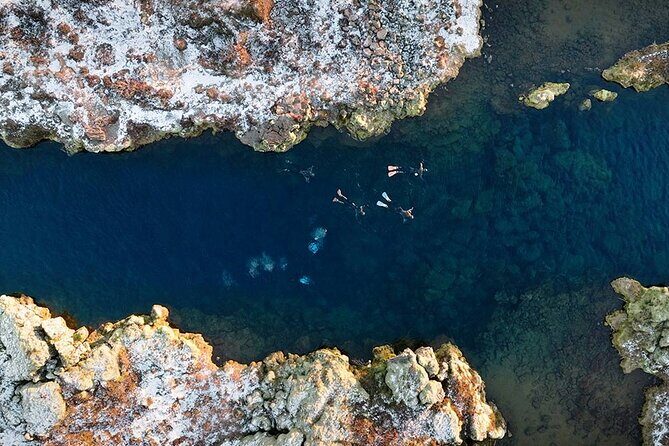
Here’s what makes Silfra different. You’re not just looking at “pretty water.” You’re moving through a physical crack system where Iceland’s tectonic plates are separated by a narrow gap.
Your route typically starts after you descend, and then you follow your guide through the Silfra Deep Crack. This is where you’ll notice the electric-blue clarity and the sense of space despite narrow passages. Visibility can exceed 328 feet (100 meters), which is why the underwater look is so unreal.
The narrow gap, then the bigger rooms
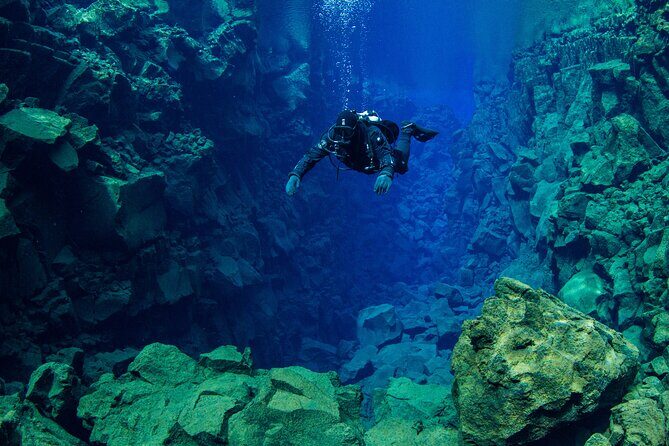
From the crack, the route leads into Silfa Hall and then onward into Silfra Cathedral. The Cathedral is described as the deepest point around 72 feet (22 meters). Underwater, that change in structure can feel like switching from a hallway to a cavern. The lava walls give the whole place a sculpted look, and the light from above turns the water into a clean, pale-blue glow.
Then you’ll continue into Silfra Lagoon, which feels like a wide open stretch—almost like the fissure system opens into a brilliant-blue pocket. This part is where many people relax a bit because you’re no longer fighting for line-of-sight and narrow passage movement.
You’ll learn how to see in this environment
Because you wear a snorkeling/dive mask underwater, the tour rules are strict: you can’t have glasses inside the mask. If you wear prescription lenses, you’ll need contact lenses or your own prescription goggles. It’s not a small detail. If your vision is corrected poorly, you’ll struggle to track guide signals and enjoy the terrain.
Gear and comfort: gloves, underlayers, and what to bring
Since you’ll be in a drysuit, comfort starts before you ever touch the ladder. You’ll be required to wear warm undergarments (fleece/wool) plus warm socks. That insulation matters because even though a drysuit keeps water out, you still have to manage heat loss through cold air and time in the water.
The tour includes the full specialized kit: drysuit, mask, fins, thermal undersuit, tanks, weights, and a regulator. That’s a big value piece because cold-water scuba gear is expensive to buy and annoying to rent in the right configuration.
You’re also strongly advised to bring a change of clothing. No drysuit is 100% guaranteed to stay completely dry for everyone and every situation, especially when you’re climbing, laddering, and hauling equipment. Having dry clothes ready makes the “done” feeling much better.
A guide-focused note on comfort
One standout detail from a guide experience in the same tour ecosystem: Franceska, the guide, was praised for calm, supportive control in cold conditions. People highlighted that she warmed gloves, helped get drysuits sorted, and kept the focus on safety and comfort. That kind of guidance is exactly what you want when the environment is cold and unforgiving.
Post-session recovery: hot chocolate, cookies, and the walk back
After the underwater portion ends, you’ll ascend to the surface and remove fins and heavier gear. Then you’ll walk back to the parking lot.
This is one of those overlooked parts of the tour: warm food and hot drinks right after you’re done help you reset faster. Here, you’ll change into everyday clothes and then recharge with warming hot chocolate and cookies. That’s simple, but it’s also a smart payoff after a cold-water session and gear-heavy effort.
Price and value: what $296.41 covers, and what costs extra
At about $296.41 per person for a 4-hour experience (approx.), the price is easier to justify than it looks at first glance—mostly because specialized gear is included. You’re not just paying for a guide’s time. You’re paying for drysuit hardware, masks, fins, thermal undersuit, tanks, weights, and regulator use.
What you should budget for separately:
- No pickup service from Reykjavik.
- Thingvellir National Park parking fee (500 ISK for a private car).
If you’re already set up as a drysuit scuba diver with your own gear, you might still find this tour fair because you’re buying the whole system: route guidance, equipment matching, and cold-water structure. If you need to rent gear and you’re not yet drysuit-ready, this is not a trial option; it’s built for trained divers who want the real Silfra experience.
Who should book this Silfra fissure scuba tour
This is a strong fit if you:
- Have PADI certification and verified drysuit scuba experience.
- Can handle cold-water conditions mentally and physically.
- Are comfortable carrying heavy equipment over about 400 meters.
- Prefer a small group so your instructor can keep an eye on your setup and buoyancy.
It’s less of a fit if you:
- Don’t meet the drysuit documentation requirements.
- Haven’t used a drysuit within the last 2 years.
- Struggle with cold or with carrying gear while wearing winter clothing.
Also, if winter weather is a concern for you, be aware there’s a chance the instructor changes the plan to a single longer session if temperatures drop below -0°C for safety reasons.
A quick reality check before you go
Silfra is famous for clarity, and you will get that electric-blue visibility. But the more accurate promise is this: you get a guided route through named geological spaces, with a pre-water process built around safety and drysuit competence.
If you like structured instruction and you’re ready for the physical work, this tour can feel smooth even though the environment is rough.
Should you book this Silfra fissure scuba tour?
I’d book it if you’re a drysuit-ready scuba diver who wants a small-group route with clear structure and included gear, plus a warm recovery afterward. The $296-ish price feels more reasonable when you consider that drysuit-specific equipment and tanks are all part of the package.
Skip (or pick another option) if you don’t already meet the drysuit requirements or if you’re hoping this will act like an entry-level cold-water introduction. The tour is set up to keep you safe by matching your training level to the conditions—so that makes it harder to “wing it,” which is exactly the point.
FAQ
Where do I meet for the Silfra fissure scuba tour?
You meet at the Silfra meeting point at Vallarvegur, 806, Iceland. The tour ends back at the same meeting point.
How long is the experience?
The total experience is about 4 hours (approx.).
What’s included in the tour price?
You get a guided scuba tour in Silfra with a PADI Divemaster, all specialized dive equipment (including drysuit, mask, fins, thermal undersuit, tanks, weights, and regulator), plus hot chocolate and cookies.
Do I need pickup from Reykjavik?
No pickup is included. You’re responsible for getting yourself to the meeting point.
What are the drysuit requirements?
The tour requires previous drysuit scuba experience. You need to show a drysuit certification card or a logbook with at least 10 drysuit dives signed by a dive professional, and you need to have dived in a drysuit within the last 2 years.
How does winter change the schedule?
If winter temperatures fall below -0°C, there’s a possibility your instructor changes the plan for safety reasons, including converting the experience to a single dive of approximately 45 minutes.